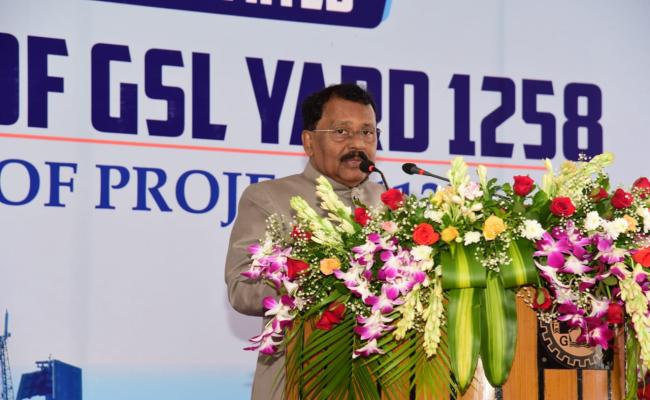
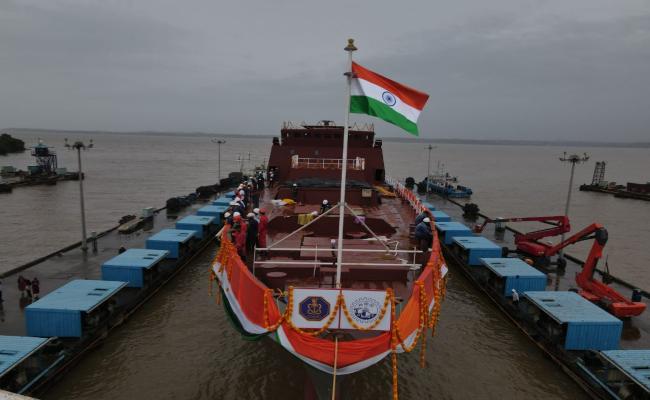
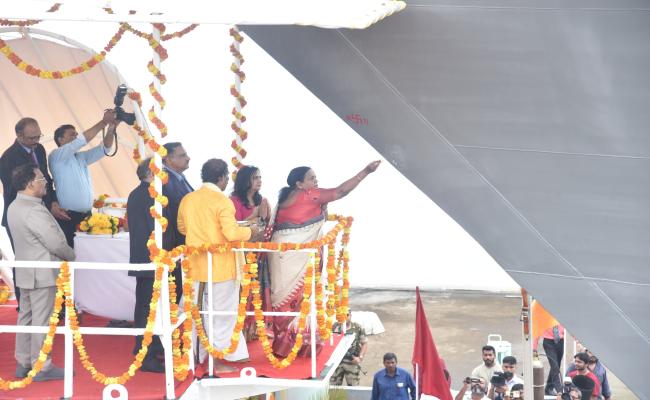
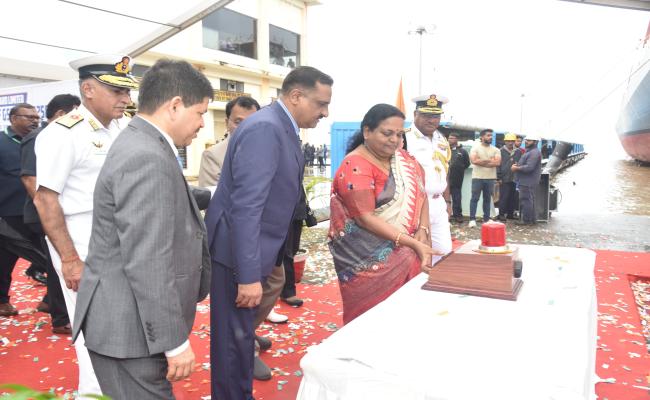
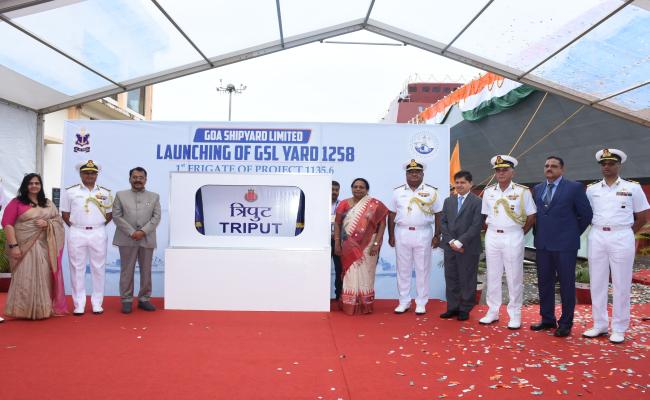
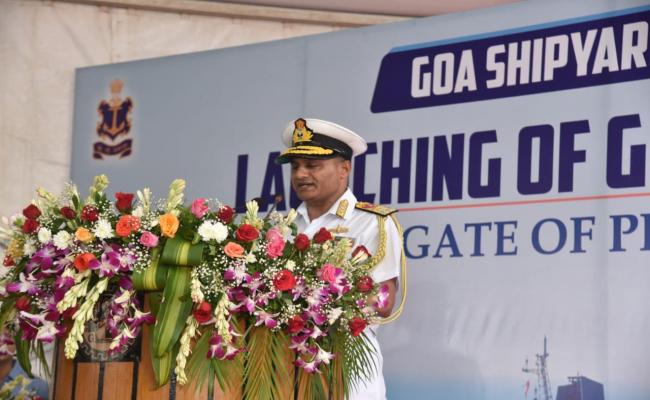

The first of two Advanced Frigates under construction by Goa Shipyard Limited GSL for Indian Navy was launched on 23 July 2024 at Goa. In keeping with maritime tradition, the ship was launched by Smt Rita Sreedharan to the invocation from Atharva Veda in the presence of Shri P S Sreedharan Pillai, Hon’ble Governor of Goa. The ship has been named Triput after the mighty arrow, representing the indomitable spirit of Indian Navy and its ability to strike far and deep. The contract for building two Triput class Advance Frigates was signed between MoD and GSL on 25 January 2019. The ship is designed for combat operations against enemy surface ships, submarines and aircraft. The Triput class ships are 124.8m long and 15.2m wide, with a draught of 4.5m. Their displacement is approx. 3600 tons and speed a maximum of 28 knots. The ships are equipped with stealth features, advanced weapon and sensors and platform management systems. Being constructed at GSL, the Triput class of ships are follow-on ships of Teg and Talwar class ships acquired from Russia. These frigates are being constructed for the first time indigenously by an Indian Shipyard. In line with Aatmanirbhar Bharat initiative, a large percentage of the equipment fit, including weapons and sensors is of indigenous origin, thereby ensuring that large scale defence production is executed by Indian manufacturing units, generating employment and capability enhancement within the country.